 Bellingham Roofing
 Siding Replacement for Columbia-Area Homes
Columbia is one of Bellingham's older, established neighborhoods, sitting close to downtown and Bellingham Bay with a mix of home ages and styles — from early-1900s construction to more recent infill. That mix means siding conditions vary a lot from block to block. Some homes still carry original wood siding that's been painted and patched for decades. Others have vinyl or engineered wood from a past remodel that's now showing its age. What almost every Columbia home has in common is exposure to the same demanding marine climate: salt air drifting in off the bay, long stretches of driving rain through fall and winter, and a moss season that can run most of the year on shaded walls.
This page is specifically about siding replacement for Columbia homes — not a general overview of every exterior service we offer. If your siding is original, deteriorating, or simply wasn't built for this climate to begin with, here's what actually matters for getting a replacement right in this part of Bellingham.
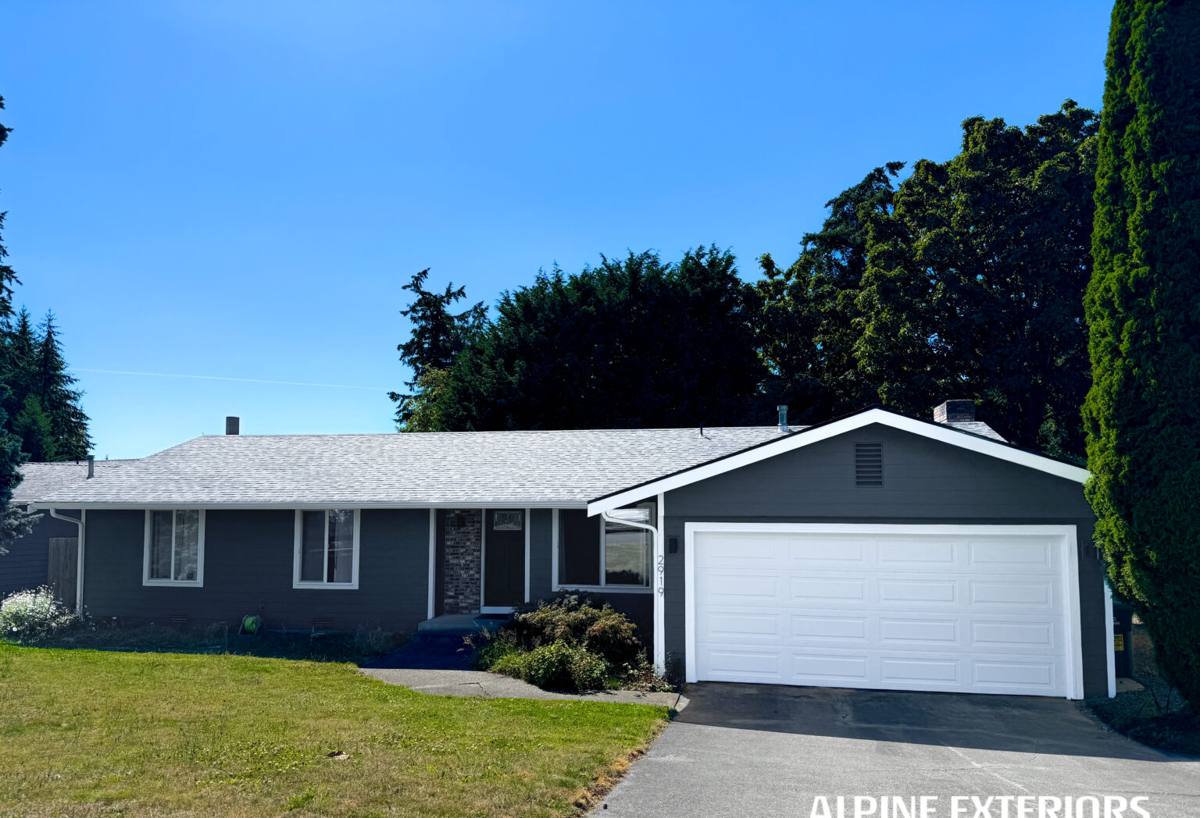
What This Corner of Bellingham Does to Siding
Salt Air Off the Bay
Being close to Bellingham Bay means Columbia homes deal with salt-laden air more consistently than neighborhoods set further inland. Salt accelerates corrosion on fasteners, flashing, and any exposed metal trim, and it breaks down lower-grade paints and coatings faster than a dry climate ever would. On older homes with original wood siding, this shows up as paint that needs repainting more often than the label promises and hardware that rusts and stains the siding around it well before the wood itself has failed.
Driving Rain, Not Just Rainfall Totals
Whatcom County's storms tend to push rain sideways into walls rather than dropping it straight down, and Columbia's position near the water means that wind-driven pattern is a regular feature of the wet season. That sideways load finds its way into seams, lap joints, and fastener points that a straight-down rain would never reach. It's one of the main reasons siding that looks fine from the street can be hiding real moisture damage behind it.
A Long Moss Season
Mild temperatures combined with near-constant moisture give moss and mildew a long growing season here, and Columbia's mature tree canopy and older lot layouts mean plenty of homes have shaded, north-facing walls that stay damp for extended stretches. On wood-based or wood-look siding, that ongoing dampness isn't just a cosmetic problem — it's a maintenance and durability issue that gets worse every year it isn't addressed.
Signs a Columbia Home's Siding Needs Replacing, Not Just Patching
Because Columbia has such a range of home ages, we see the full spectrum of siding condition on this side of town — from cosmetic wear that a repaint could handle to structural failure that no amount of caulk will fix. Some signs point clearly toward replacement rather than repair:
- Siding that feels soft, spongy, or gives slightly when pressed, especially low on the wall or around window and door trim
- Moss or dark staining that comes back within weeks of being cleaned off
- Paint that's failing faster than a normal repaint cycle, or that won't hold a fresh coat for more than a season or two
- Visible warping, cupping, or separation at seams and butt joints
- Rust staining bleeding from fasteners or trim, common on older homes with original hardware
- Gaps or daylight visible at corners, window trim, or where siding meets the foundation
- A musty smell or visible mold on interior walls that back up to exterior siding
One or two of these on their own might mean a repair will hold for a while longer. Several together, especially on an older Columbia home that's never had a full re-side, usually means the siding has reached the point where patching is just delaying the inevitable at a higher long-term cost.
Why We Install Only James Hardie Fiber Cement
We don't install vinyl, LP SmartSide, Cemplank, Allura, primed spruce, or cedar. That's a deliberate professional standard, not a limitation on what we're capable of doing. In a climate like Bellingham's — and especially this close to the bay — the products that struggle over time are the ones that absorb moisture, depend on a coating to keep water out for decades, or expand and contract enough to open up seams.
James Hardie fiber cement is engineered specifically for this kind of exposure. It's non-combustible, it doesn't swell or rot the way wood-based products can, and the factory-applied ColorPlus finish is baked on and warrantied to resist the fading and chalking that constant moisture and UV exposure cause over the years. Hardie also builds climate-specific HZ product lines engineered for regions like ours — a level of climate-matching that most competing siding products simply don't offer. Backed by a strong transferable warranty and installed to manufacturer spec, it's the product we're willing to put our name behind on a Columbia home, not just something that looks good on install day.
We've made this call after watching how different materials actually perform on tear-offs and service calls, not from a supplier arrangement. Each of the products we don't install has a place in the market and homeowners who are satisfied with them. We'd rather install one system thoroughly and correctly than offer several products we can only support moderately well.
What a Correct Siding Replacement Actually Involves
Full Tear-Off, Not Overlay
Installing new siding directly over old siding is sometimes technically possible, and it lowers upfront labor cost. But it also means whatever moisture damage, rot, or failed flashing exists behind the old siding stays hidden, and the new material is only as good as what it's sitting on. For a Columbia home in a marine climate, we treat a full tear-off to the sheathing as the standard, not the upgrade — it's the only way to actually verify the wall behind the siding is sound before committing new material to it.
Inspecting and Repairing What's Underneath
Once the old siding is off, we can see what years of salt air and driving rain have actually done to the sheathing, framing, and water-resistive barrier underneath. On older Columbia homes, this sometimes turns up rotted or delaminated sheathing, water-damaged framing around openings, or an outdated barrier that needs to be replaced to current standards. A fair, honest process flags this possibility up front rather than treating it as a surprise change order once the job is underway.
Flashing, Fastening, and Drainage Detail
This is where a lot of siding jobs quietly succeed or fail, and it's the part homeowners rarely see once the job is finished. Correct installation means:
- A rain screen gap behind the siding so any moisture that gets past the exterior surface can drain and evaporate instead of sitting against the sheathing
- Fastener spacing and type that match Hardie's specification, since incorrect fasteners are one of the more common causes of early siding failure we find on tear-offs
- Properly lapped house wrap and flashing at every window, door, and roof-to-wall transition so water sheds down and out, especially on walls that catch wind-driven rain directly
- Sealed butt joints and trim transitions, since open or poorly sealed joints are where moisture finds its way behind siding first
- Correct clearance above grade and hardscaping, which matters more here given how wet the ground stays through the winter
None of this is exotic. It's the manufacturer's own installation spec, followed consistently on the details that are harder to see once the job wraps up — which is exactly where corner-cutting tends to hide.
How Our Process Works
A siding replacement on a Columbia home generally moves through the same stages, though the specifics depend on the home's age, condition, and layout:
- Walkthrough and assessment: We look at the current siding, note visible problem areas, and get a sense of the home's age, construction, and exposure before recommending anything.
- Written estimate: A clear scope specifying tear-off, material and product line, flashing and drainage details, trim work, and how any hidden damage discovered during the job will be handled.
- Tear-off and inspection: Old siding and trim come off down to the sheathing, which is inspected and repaired as needed before anything new goes on.
- Water-resistive barrier and drainage plane: A new barrier and rain screen gap go in correctly, since this layer does most of the real work keeping moisture out of the wall assembly.
- Hardie installation to spec: Fastening, flashing, and joint sealing follow manufacturer requirements, not a shortcut version of them.
- Trim, caulking, and final detail work: Corner boards, window and door trim, and color-matched caulking finish the job so it looks intentional, not assembled.
- Final walkthrough: We go over the finished work with you before considering the job complete.
Material and Cost Factors for a Columbia Siding Project
Every home prices differently, but a few factors consistently drive the number on a Columbia siding replacement:
| Factor | Why It Matters Here |
|---|---|
| Home age and construction | Older Columbia homes may have sheathing, framing, or wiring behind the siding that needs attention once it's exposed |
| Tear-off vs. overlay | Tear-off costs more upfront but is the only way to inspect and fix what salt air and driving rain may have already damaged behind old siding |
| Home shape and story count | Multiple gables, dormers, and second stories add cutting, fitting, and flashing time beyond simple square footage |
| Window and door count | Every opening needs trim and flashing work, which adds labor independent of total wall area |
| Material and product line | James Hardie's HZ5 line costs more upfront than vinyl or engineered wood, but carries a factory finish and warranty built for this climate |
| Hidden repairs | Rot, water damage, or outdated barriers found once old siding is off are common on older homes and should be discussed as a contingency before work starts |
We walk every property before putting a real number on the work, since two Columbia homes on the same block can need very different scopes once we're actually pulling old siding off.
What to Confirm Before You Hire
Not every siding quote is pricing the same scope of work, even when the numbers look similar. Before comparing bids for a Columbia siding project, confirm each one specifies:
- Full tear-off to the sheathing, not an overlay over existing siding
- Whether sheathing inspection and repair, if needed, is included or billed separately as discovered
- The specific product line and profile being installed, not just "fiber cement" generically
- A new water-resistive barrier and drainage gap as part of the scope
- Corrosion-resistant fasteners and flashing appropriate for a coastal, high-moisture climate
- Trim, corner, and soffit/fascia work included, not priced as a later add-on
- Permit handling and manufacturer warranty registration included
Why Hiring a Crew That Already Works Columbia Matters
A lot of what makes a siding job hold up in this neighborhood comes down to details a generic, one-size-fits-all installation doesn't account for — how much wind-driven rain a given wall orientation actually takes, where moss establishes itself first under Columbia's mature tree cover, how much clearance siding needs above grade given how wet the ground stays, and how flashing needs to be sequenced so water sheds correctly through an entire wet season rather than just during a dry-weather inspection.
Crews who work this side of Bellingham regularly see these patterns repeat from house to house, and that familiarity shows up in the small, on-site decisions that homeowners rarely notice but absolutely feel in how the home performs over the following decade — fastener placement, where a J-channel actually needs to go, and which walls are worth extra flashing attention because of how they sit relative to prevailing wind and rain.
Timing a Siding Project Around Bellingham's Weather
Whatcom County's wettest, windiest stretch generally runs from late fall through winter, and Columbia's proximity to the bay means that stretch can be a little harder on both a house and an installation crew than it is further inland. Spring and summer typically offer the driest, most stable conditions for siding work, since fiber cement, house wrap, and trim materials all perform better when they can be installed under dry conditions rather than between storm systems. That said, siding that's already showing active moisture damage is worth addressing on its own timeline — waiting for the ideal season only gives an existing problem more time to spread behind the wall.
If your Columbia home's siding is showing its age or you're planning ahead before a small problem becomes a bigger one, we're glad to take a look. Reach out using the form below for a free, no-pressure estimate — we'll give you a straightforward assessment of what your home actually needs.