 Bellingham Roofing
 Why Fairhaven's Climate Is Hard on Siding
Fairhaven sits close to Bellingham Bay, and that proximity to saltwater changes what siding has to deal with compared to homes further inland. It's not just rain — it's the combination of salt-laden air, wind-driven moisture, and long stretches of shade and dampness that make Whatcom County one of the tougher testing grounds for exterior building materials on the West Coast. A siding product that performs fine in a drier climate can struggle here within a decade if it wasn't built, or installed, with this specific environment in mind.
Salt Air
Air carrying salt off the bay accelerates corrosion on fasteners, trim, and any metal components tied into the siding system. It also degrades certain paints and coatings faster than inland exposure would, which is part of why factory-applied, baked-on finishes hold up better here than field-applied paint.
Driving Rain
Storms coming off the water don't just fall straight down — wind pushes rain sideways into wall assemblies, testing every seam, joint, and piece of flashing. Siding that relies on caulk alone to stay watertight, rather than proper lapping and drainage behind the cladding, tends to show problems first in exactly this kind of weather.
A Long Moss Season
Between the marine humidity and the tree cover common in and around Fairhaven, many homes stay in shade and dampness for months at a time. That's ideal growing conditions for moss and algae, which hold moisture against the siding surface and, on the wrong substrate, can contribute to rot, swelling, or coating breakdown if it isn't addressed.
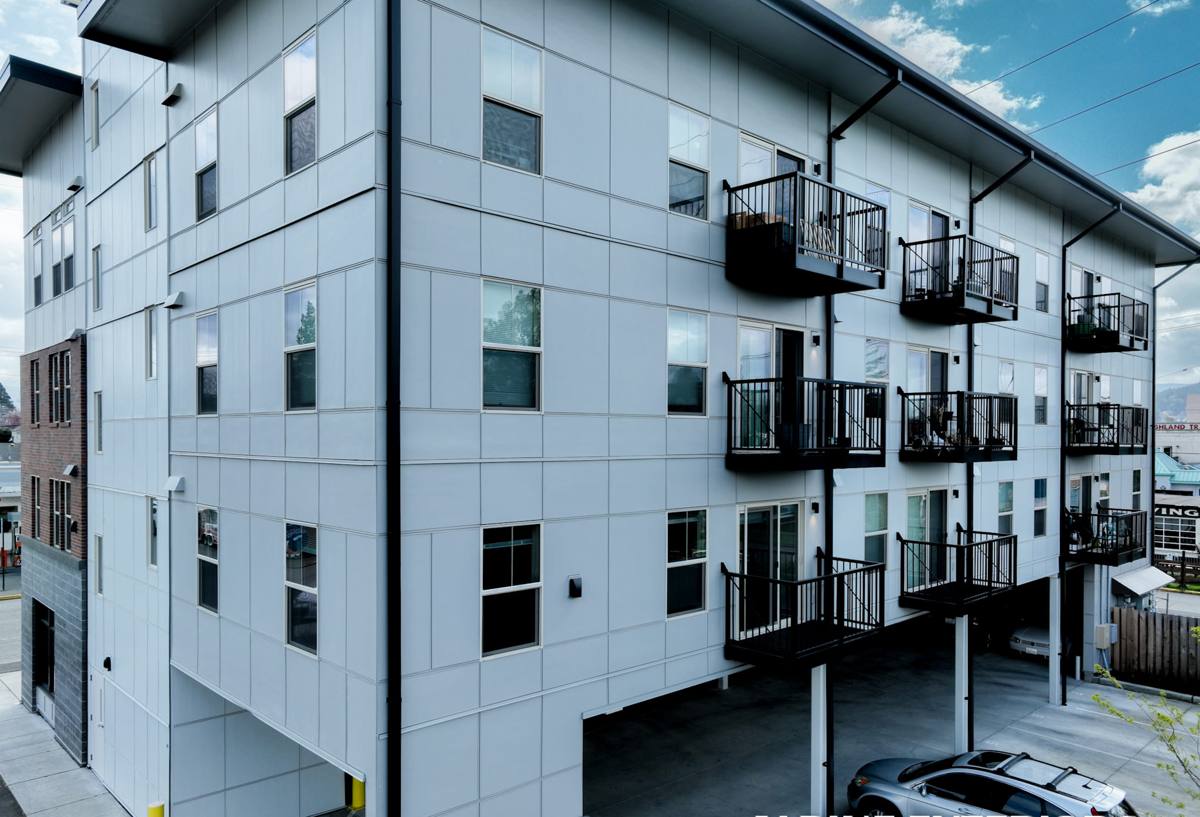
Signs Your Siding Has Reached the End of Its Life
Some siding problems are obvious from the ground. Others show up as soft spots, discoloration, or subtle warping that homeowners write off as cosmetic until they get a closer look. In a climate like ours, it's worth checking these signs a little more often than you would in a drier region.
- Soft or spongy spots when you press on the siding, especially near the bottom courses and around windows
- Persistent moss, algae, or black streaking that comes back within weeks of cleaning
- Visible warping, cupping, or buckling boards, particularly on the shaded or bay-facing walls
- Paint that's peeling, bubbling, or chalking faster than a normal repaint cycle would explain
- Gaps opening up at seams, corners, or trim where caulk has failed and not been replaced
- A musty smell or visible staining on interior walls that share an exterior wall with problem siding
- Rising heating bills with no other explanation, which can point to a compromised weather barrier
One or two of these on their own might mean a repair. Several at once, especially combined with the siding's age, usually means it's time to talk about full replacement rather than patching a system that's already failing underneath.
What a Correct Siding Replacement Involves
Replacing siding is more than swapping old boards for new ones. In a wet marine climate, most of what actually determines how long a siding job lasts happens before the new siding ever goes up.
Tear-Off and Inspection
Once the old siding comes off, the sheathing underneath gets inspected for rot, soft spots, or water damage that was hidden. This is the point where problems that caused the original siding to fail — bad flashing, missing house wrap, trapped moisture — get found and fixed instead of sealed back up behind new material.
Weather-Resistive Barrier and Flashing
A correctly installed weather-resistive barrier, with properly lapped and taped seams, is what actually keeps wind-driven rain out of the wall assembly — the siding itself is the first line of defense, not the only one. Flashing around windows, doors, and any wall penetrations has to be integrated with that barrier in the right order, not just caulked over afterward.
Fastening and Clearances
Fastener type, spacing, and placement matter more in a coastal climate than people expect, and so does keeping proper clearance between the bottom of the siding and grade, decks, or roof lines, so water has somewhere to go instead of wicking up into the material.
Why We Install Only James Hardie Fiber Cement
We don't install vinyl siding, LP SmartSide, primed wood, cedar, or other fiber cement brands. That's a deliberate standard, not a limitation in what we're capable of installing. Vinyl can warp and fade under UV and temperature swings and offers little real protection against moisture intrusion behind it. Engineered wood products are moisture-sensitive at their core, which is a difficult trade-off to accept in a climate that stays damp for much of the year. Primed wood and cedar look good initially but demand a maintenance schedule — recoating, caulking, monitoring for rot — that most homeowners underestimate until they're several years in.
James Hardie fiber cement is non-combustible, dimensionally stable in wet-dry cycling, and comes with a factory-applied ColorPlus finish that's baked on and warranted, rather than something we're relying on field-applied paint to hold up over time in salt air. It also carries a strong transferable warranty, which matters if you plan to sell the home down the road. We standardized on it because, installed correctly, it holds up to exactly the conditions Fairhaven throws at a house — not because it's the cheapest option or the easiest to install.
Choosing the Right Product Line and Color for a Fairhaven Home
Climate-Engineered Product Lines
James Hardie engineers its siding by climate zone, and the HZ5 line is built for regions like ours — cooler, wetter, with real seasonal swings — rather than the hot, humid Southeast profile some of their other product lines target. That distinction affects the composition of the board itself, not just the finish on top.
Matching the Look
Fairhaven has a mix of older homes with real character and newer construction, often on lots with mature trees and close neighbors. James Hardie's lap siding, shingle-style panels, and trim profiles can be matched to a range of architectural styles, and the ColorPlus palette gives you a way to pick a finish that fits the neighborhood without locking you into a repaint cycle every few years.
| Product Line | Best Fit For | Notes |
|---|---|---|
| HardiePlank Lap Siding | Most single-family homes | Available in several exposure widths and textures |
| HardieShingle | Craftsman or cottage-style homes | Mimics a shingled look without the maintenance of real wood shingles |
| HardiePanel | Accent walls, gables, modern styling | Often paired with trim boards for a clean, contemporary look |
| HardieTrim | Window, corner, and fascia detailing | Keeps trim material consistent with the field siding |
Our Siding Replacement Process
- Assessment: We walk the exterior, check for moisture and rot risk areas, and talk through what your home actually needs versus what's optional.
- Proposal: You get a clear, written scope — product line, color, trim details, and what's included — before any work starts.
- Tear-off and sheathing check: Old siding comes off, and we inspect and repair the sheathing and framing underneath before anything new goes up.
- Weather barrier and flashing: The house wrap and flashing details go in first, properly lapped and integrated around every opening.
- Siding installation: James Hardie siding and trim go up to manufacturer fastening and clearance specs, not shortcuts.
- Final walkthrough: We review the finished work with you and address anything before we consider the job done.
What Affects the Cost of Siding Replacement
Every home is different, so we don't quote a number without seeing the house, but a few factors consistently move the price up or down.
| Factor | Why It Matters |
|---|---|
| Home size and wall complexity | More square footage and more corners, gables, and dormers mean more material and labor |
| Condition of existing sheathing | Hidden rot found during tear-off adds repair work before new siding can go on |
| Siding profile and texture | Shingle-style and specialty profiles generally cost more than standard lap siding |
| Trim and detail work | Extensive trim, corner boards, and accent details add labor time |
| Site access | Tight lots, slopes, or limited driveway access can affect staging and labor time |
| Color and finish | Standard ColorPlus colors versus premium or custom options can shift material cost |
Because Fairhaven has a mix of lot sizes, older narrower properties, and homes on sloped terrain near the bay, site access is worth flagging early — it's one of the more common cost factors that catches homeowners off guard.
Why Hire a Crew That Already Works in Fairhaven
A crew that's worked in Fairhaven before already understands the practical realities of the neighborhood: navigating tighter lots, working around mature trees and the shade they create, and accounting for the extra moisture exposure that comes with being this close to the water. That familiarity shows up in small decisions — how flashing gets detailed on a bay-facing wall, where extra attention to moss and algae resistance matters most, how staging and material storage get handled on a lot with limited space — that a crew unfamiliar with the area might not think to prioritize.
It also means fewer surprises. Local building department expectations, typical permitting timelines for Bellingham and Whatcom County, and the kind of construction common in older Fairhaven homes are all things we've already worked through before, rather than learning on your project.
If your Fairhaven home's siding is showing its age, or you're simply not sure whether it's a repair or a replacement situation, we're happy to take a look. Reach out for a free, no-pressure estimate — there's a form below to get started.