 Bellingham Roofing
 Building Decks for South Hill's Particular Climate
South Hill sits on a slope above Bellingham Bay, which means most homes here deal with a mix of conditions that other neighborhoods don't get all at once: salt-tinged air drifting up from the water, driving rain that comes in sideways during winter storms, and heavy tree cover that keeps decks shaded and damp for long stretches of the year. That combination is hard on outdoor structures, and it's a big part of why we build and repair decks differently for South Hill than we would for a flat, sunny lot on the east side of town.
Composite decking isn't a magic fix for every problem a deck in this neighborhood can run into, but when it's installed correctly, it holds up to this specific mix of weather better than most alternatives. This page covers what South Hill homes actually need from a composite deck, what a correct installation involves, and how we approach the job when we're out there.
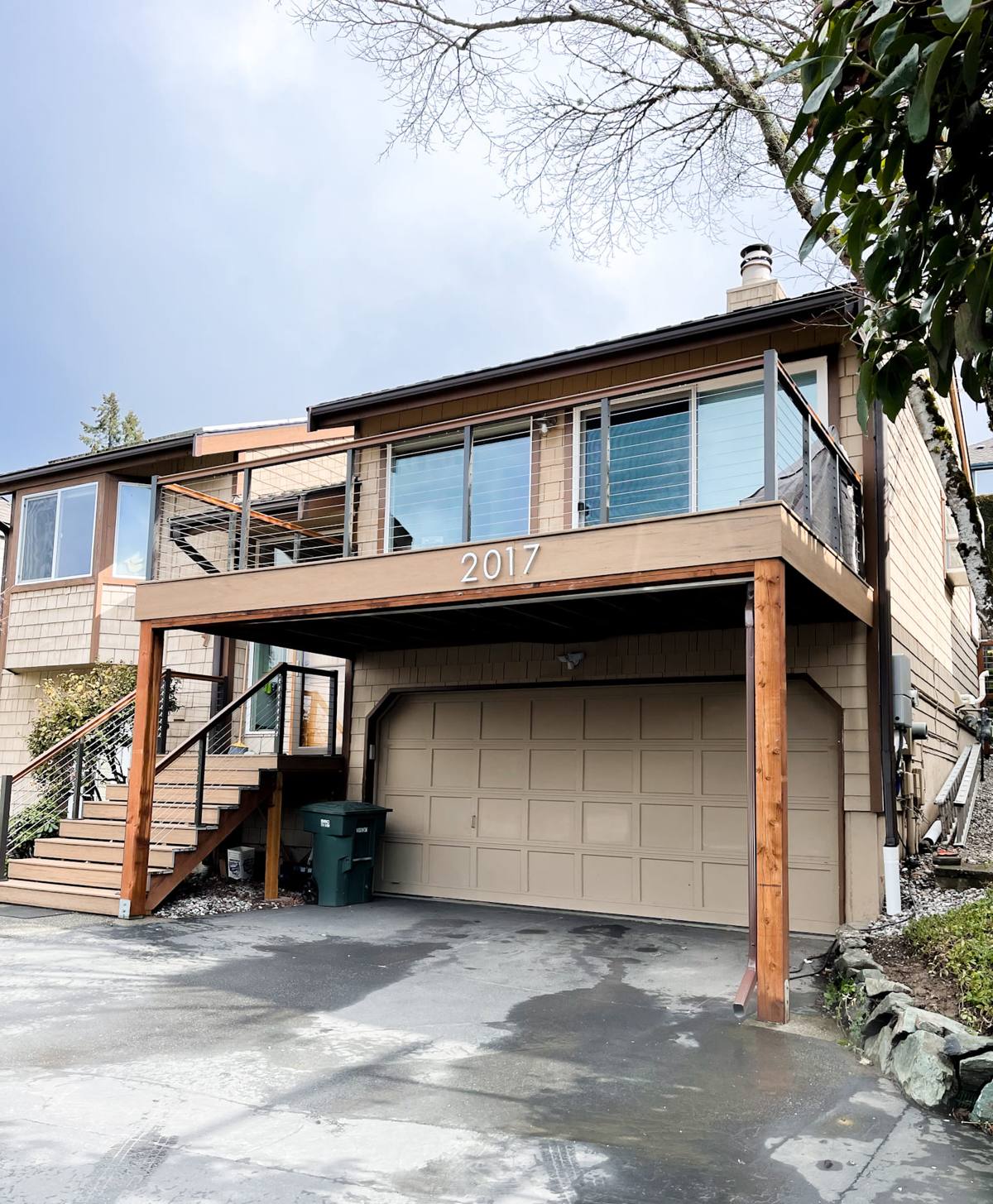
What Whatcom County Weather Does to a Deck
Bellingham's marine climate is generous with rain and stingy with sun for months at a time. On South Hill specifically, three things show up again and again when we inspect older decks:
- Moss and algae growth — shaded, tree-covered lots stay damp longer after every rain, and that moisture holds moss and algae on deck boards, railings, and stair treads much longer into the year than a sun-exposed deck would see.
- Salt air corrosion — the proximity to the bay means fasteners, flashing, and any exposed metal hardware take on rust and corrosion faster than they would further inland.
- Driving rain intrusion — wind-driven rain doesn't just fall straight down here. It gets pushed sideways into ledger connections, stair stringers, and any gap where flashing or sealant has failed.
None of these are exotic problems. They're just the normal cost of living in this part of Whatcom County, and any deck built here needs to be planned around them from the start rather than patched after the fact.
Why Composite Decking Fits South Hill
Composite boards are made from a blend of wood fiber and plastic (or, in the case of capped composites, a full polymer shell over that core). The appeal for a neighborhood like South Hill comes down to a few honest trade-offs:
Moisture resistance
Capped composite boards don't absorb water into exposed end grain the way solid wood does, which matters a lot on a deck that stays wet under tree canopy for days after a storm. That doesn't mean composite is waterproof everywhere — cut ends, fastener holes, and the underside of boards still need to be handled correctly, which we'll get into below.
Moss and mold resistance
Composite surfaces are less hospitable to moss and algae than raw wood grain, and they're far easier to clean when growth does show up. A wash with the right cleaner and a stiff brush usually does the job, without the sanding or re-staining that wood decks need after moss takes hold.
No annual refinishing
Wood decks in this climate need to be cleaned, brightened, and resealed on a fairly tight schedule to keep moisture out. Composite doesn't need staining or sealing at all, which is a real maintenance-time savings for homeowners who don't want a yearly deck project.
Composite isn't the right call for every homeowner or every budget, and we'll say so plainly during an estimate if a wood or PVC deck actually fits your situation better. But for a shaded, rain-exposed, salt-air lot on South Hill, it's usually the lowest-maintenance option that still looks good for the long haul.
Composite vs. Wood vs. PVC for This Climate
| Factor | Wood | Composite | PVC |
|---|---|---|---|
| Moisture/moss resistance | Lowest — absorbs water, feeds moss | High with capped boards | Highest — fully synthetic |
| Annual maintenance | Cleaning, sanding, staining/sealing | Occasional wash | Occasional wash |
| Upfront cost | Lowest | Mid-range | Highest |
| Appearance over time | Fades, splinters, gray without upkeep | Holds color well with cap layer | Very stable, can look less like wood |
| Fastener/hardware corrosion risk | Standard — depends on fastener grade | Standard — depends on fastener grade | Standard — depends on fastener grade |
Hardware corrosion risk near the bay comes down to fastener and flashing quality more than decking material — that's a job-quality issue, not a brand issue, and it's true across all three options.
What a Correct Composite Installation Actually Involves
Composite decking fails early almost exclusively because of installation shortcuts, not because the material itself is weak. This is where South Hill's conditions make correct technique non-negotiable.
Framing and ventilation
The structure underneath still has to be built to shed water, with proper joist spacing for the specific composite product being used (composite typically needs tighter joist spacing than wood decking) and enough airflow underneath to let the framing dry out between rain events.
Ledger and flashing details
Where the deck attaches to the house is the single most common failure point we see on older South Hill decks, because that's exactly where driving rain gets pushed. Correct flashing — installed in the right order, lapped the right direction — keeps water out of the wall structure, not just off the deck surface.
Fastener grade
Given the salt air, we use fasteners and hardware rated for coastal/corrosive exposure, not standard interior-grade hardware. This is a small cost difference upfront and a large difference in how the deck looks and performs in five years.
Board gapping and end treatment
Composite boards need correct expansion gaps and properly capped or treated cut ends, especially at stair edges and board butt joints, so moisture doesn't wick into the core material over time.
Our Process on a South Hill Job
- On-site assessment — we look at slope, tree cover, sun exposure, and the condition of any existing structure before recommending a material or layout.
- Structural check — ledger attachment, footings, and framing get evaluated, since a beautiful composite surface on a weak structure is just a nicer-looking problem.
- Material selection — we walk through composite options and honest trade-offs against wood or PVC based on your budget and how much upkeep you actually want to do.
- Installation — framing, flashing, fastening, and board work done to the standards above, not just to what's fastest.
- Walkthrough and cleanup — we go over care basics with you and leave the site clean.
Living With a Composite Deck in a Moss-Prone Neighborhood
Even the most moss-resistant composite deck on a shaded South Hill lot benefits from a bit of seasonal attention. A simple maintenance routine keeps a correctly installed deck looking good for its full service life:
- Sweep debris off the boards regularly, especially in fall when leaves and needles pile up and trap moisture
- Rinse or wash the surface a couple of times a year with a composite-safe cleaner to keep moss and algae from getting established
- Keep gutters and downspouts near the deck clear so runoff isn't dumping directly onto the deck surface or framing
- Trim back overhanging branches where possible to let more light and air reach the deck
- Check railings and stair connections annually for looseness, since hardware is still the part most exposed to salt air corrosion
Cost Factors for South Hill Composite Decks
| Factor | Why It Affects Price |
|---|---|
| Deck size and shape | More square footage and more cuts/angles increase material and labor |
| Slope and access | Hillside lots common on South Hill can require more complex framing or harder material staging |
| Existing structure condition | Reusing sound framing costs less than rebuilding a rotted or undersized substructure |
| Composite tier | Capped composite boards cost more upfront than uncapped, but resist moisture and moss better in shaded, damp settings |
| Railing and stair complexity | Multiple stair sets or custom railing add labor beyond the deck surface itself |
We don't quote a job without seeing it — a flat, easy-access lot and a steep, tree-covered South Hill slope are genuinely different projects, and a fair estimate reflects that.
Why a Crew That Already Works South Hill Matters
A contractor who's worked this neighborhood before already knows to check ledger flashing first, already specs corrosion-resistant hardware without being asked, and already accounts for tree cover when talking through maintenance expectations. That familiarity with Bellingham's climate and Whatcom County's building requirements shows up in fewer surprises during the job and a deck that's built for the conditions it will actually sit in, not generic conditions from a manufacturer's install guide.
If you're weighing a new composite deck or replacing a tired wood one on South Hill, we're happy to come take a look, walk the site with you, and give you a straight answer on what it would take. Reach out through the form below for a free, no-pressure estimate.