 Bellingham Roofing
 Windows Built for the Happy Valley Climate
Happy Valley sits close enough to Bellingham Bay and the Salish Sea that salt-laden air, driving rain off the water, and long stretches of gray, wet weather are just part of owning a home here. Add in Whatcom County's moss season — that stretch from late fall through spring when everything north-facing and shaded stays damp for weeks at a time — and windows take a beating that homes further inland never see. Frames swell and stick. Seals fail early. Condensation builds between panes. None of that is a defect in the house; it's what happens when ordinary windows meet a marine climate they weren't really built for.
A window installed correctly for this neighborhood needs to do three things well: shed wind-driven rain before it ever reaches the wall assembly, resist the slow corrosion that salt air causes in hardware and metal components, and keep moisture from condensing inside the wall cavity where nobody can see it until there's a problem. Get those three things right and a window installation should give you decades of quiet performance. Get them wrong — even with an expensive window — and you're looking at rot, mold, and a repeat job sooner than you'd think.
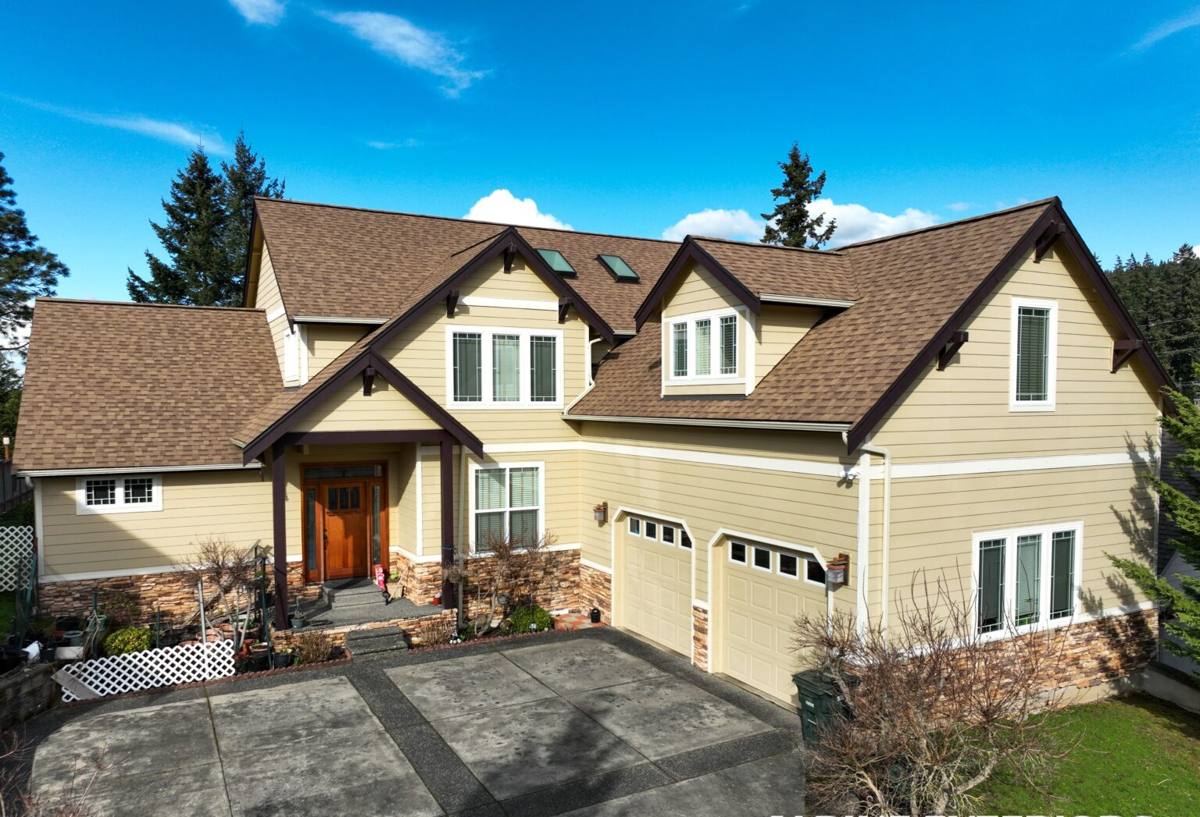
How We Approach a Happy Valley Window Job
Assessment First
Before we talk product, we look at the opening. Every window failure we get called out for eventually traces back to what's happening around the window, not the glass itself — flashing that was never installed, house wrap that was cut wrong, or a sill pan that doesn't exist. So our first step is checking the existing rough opening, the condition of the sheathing and trim, and whether there's any sign of past water intrusion. This tells us whether it's a straightforward swap or whether we need to address something behind the wall first.
Flashing and Water Management
This is the part of the job nobody sees and the part that matters most in this climate. A correct installation includes a sloped sill pan so any water that gets past the window drains back out instead of pooling, properly lapped flashing tape that integrates with the house wrap (upper layers overlapping lower ones, never the reverse), and head flashing that directs rain away from the top of the frame. In a neighborhood that gets sustained wind-driven rain off the bay, skipping or shortcutting this step is the single most common cause of the "why is there a stain under my window" call we get a few years after a cheap installation.
Sealing and Insulation
Once the window is set, plumbed, and squared, the gap between the frame and the rough opening gets sealed with a low-expansion foam or backer rod and sealant — never packed tight with standard spray foam, which can bow the frame and cause the sash to bind. Exterior sealant joints get a compatible, paintable sealant rated for exterior exposure, and we check that it's tooled properly so it actually sheds water instead of trapping it against the frame.
Signs a Happy Valley Home Needs New Windows
- Visible fogging or a haze between the panes — the seal on the insulated glass unit has failed and it can't be repaired, only replaced
- Frames that have swollen, are difficult to open, or no longer latch tightly
- Soft or discolored trim and sill material, often a sign of long-term moisture behind the window
- Persistent condensation on the inside of the glass even with normal ventilation
- Noticeable draft or cold spot near the window on windy days
- Corrosion or stiffness in hardware, hinges, or locks — common where salt air reaches the frame
- Moss or dark streaking building up on the sill or below the window from constant dampness
Any one of these on its own might just need attention, but two or three together usually mean the window and its surrounding flashing have reached the end of their service life.
Choosing Materials for a Marine Climate
Window frame material matters more here than in a drier inland climate, because the frame is constantly cycling between wet and dry and is exposed to airborne salt. We steer homeowners toward materials and hardware finishes that hold up to that cycle without high maintenance demands.
| Frame Material | Moisture & Salt Air Behavior | Maintenance |
|---|---|---|
| Vinyl | Does not rot or corrode; performs well in damp, salty conditions | Low — occasional cleaning |
| Fiberglass | Very stable in temperature and moisture swings; strong long-term performer | Low |
| Aluminum | Can be prone to corrosion near the coast unless properly coated; conducts cold | Moderate — watch for pitting near hardware |
| Wood (uncoated or bare) | Attractive but absorbs moisture readily; higher rot risk in this climate without diligent upkeep | High — regular refinishing needed |
| Wood-clad (exterior vinyl or aluminum clad) | Good compromise — protected exterior face, wood interior | Low to moderate |
We don't install bare wood exteriors as a matter of professional standard in this area — not because wood can't be beautiful, but because the maintenance burden to keep it sound in a marine climate is significant, and a missed refinishing cycle can shorten its life considerably. Clad or fully manufactured frame materials give homeowners the same look with far less upkeep.
What Drives Cost on a Window Installation
| Factor | Why It Matters |
|---|---|
| Number and size of openings | More or larger windows mean more material and labor |
| Frame material and glass package | Fiberglass and upgraded low-E or triple-pane glass cost more than standard vinyl |
| Condition of the existing opening | Rot repair, resheathing, or reframing adds time and material before the new window ever goes in |
| Full-frame vs. insert replacement | Full-frame replaces flashing and trim too; insert reuses the existing frame where it's still sound |
| Access and height | Second-story or hard-to-reach windows take more setup time |
| Trim and interior finish work | Matching existing interior casing or sills adds finish labor |
We won't quote a firm number without seeing the openings, but as a general range, a straightforward single window replacement on a typical Happy Valley home often runs from the low thousands per window for a standard insert job, up from there for full-frame replacement, larger openings, or hidden repair work discovered once the old window comes out. Full-frame replacement costs more up front but is the right call whenever the surrounding flashing or sheathing is already compromised — patching a window into a wall that can't manage water properly just delays the same problem.
Insert vs. Full-Frame Replacement
An insert replacement fits a new window into the existing frame, which is faster and less invasive when that frame and its flashing are still sound. Full-frame replacement removes everything down to the rough opening, which costs more but is the only way to actually fix flashing, rot, or a poorly built original installation. In a climate this wet, we'd rather tell a homeowner honestly that their situation calls for full-frame work than install a new window into a wall assembly that's still going to leak.
Our Installation Process
- On-site assessment of existing windows, openings, and any visible moisture damage
- Written estimate covering material choice, scope (insert or full-frame), and any repair work identified
- Careful removal of the old window and inspection of the opening once it's exposed
- Repair of any rot, damaged sheathing, or compromised house wrap before the new window goes in
- Installation of sill pan flashing, window unit, and integrated head/side flashing tied into the existing water-resistive barrier
- Air sealing, insulation of the perimeter gap, and interior/exterior trim work
- Final check of operation, seal, and cleanup of the work area
We treat the flashing and water management steps as non-negotiable regardless of which window brand or material a homeowner chooses. A quality window with poor flashing will still leak; a modest window with correct flashing will hold up for years.
Why a Local Crew Matters in Happy Valley
Window installation done well is site-specific. A crew that regularly works in and around Bellingham and Whatcom County has already seen how houses in this exact area age — which orientations take the worst wind-driven rain, how moss and shade patterns affect specific wall assemblies, and what original construction in older homes here tends to look like once you open up an opening. That familiarity shortens the assessment phase and means fewer surprises once work starts.
It also means accountability. A local crew is easy to reach if a question comes up after the job, stands behind its own flashing and sealant work, and has a reputation in the community worth protecting. That's a different relationship than hiring a crew that installs a window and is on to the next county the same week.
Keeping New Windows Performing Long-Term
- Rinse salt residue and grime off frames and glass periodically, especially after storms off the bay
- Check exterior sealant joints once a year for cracking or separation and have them touched up before they fail
- Keep gutters and downspouts clear so water isn't sheeting down the wall directly above window openings
- Clear moss or organic buildup from sills and nearby siding promptly rather than letting it sit damp against the window
- Operate hardware periodically through the wetter months so mechanisms don't seize from disuse
- Watch for early signs of trouble — sticking sashes, new drafts, or fogging — and address them before they become bigger repairs
A correctly installed window in this climate is largely maintenance-free, but a few minutes of seasonal attention goes a long way toward getting the full service life out of it.
If you're noticing drafts, fogged glass, or sticking frames on your Happy Valley home, we're happy to take a look and give you an honest, no-pressure estimate — no obligation, just a straight assessment of what your windows and openings actually need. The form below gets you on our schedule.