 Bellingham Roofing
 Windows Built for Silver Beach's Climate, Not a Catalog Photo
Silver Beach is one of those Bellingham neighborhoods where the housing stock tells a story: older homes with original wood or aluminum-frame windows sitting next to newer builds, remodels, and everything in between. What almost all of them have in common is exposure to the same demanding conditions — salt-laden air off the water, driving rain that comes in sideways during a winter blow, and a moss season that seems to stretch longer every year. Windows here don't fail because they're old. They fail because they were never detailed to handle what this specific climate throws at a building envelope, year after year.
When we talk about window installation in Silver Beach, we're not just talking about swapping glass. We're talking about how a window is flashed, sealed, and integrated into the wall assembly so that Whatcom County weather stays outside where it belongs. Get that part wrong and even a good window will leak, fog, or rot its frame within a few seasons. Get it right and the window will outlast the trim around it.
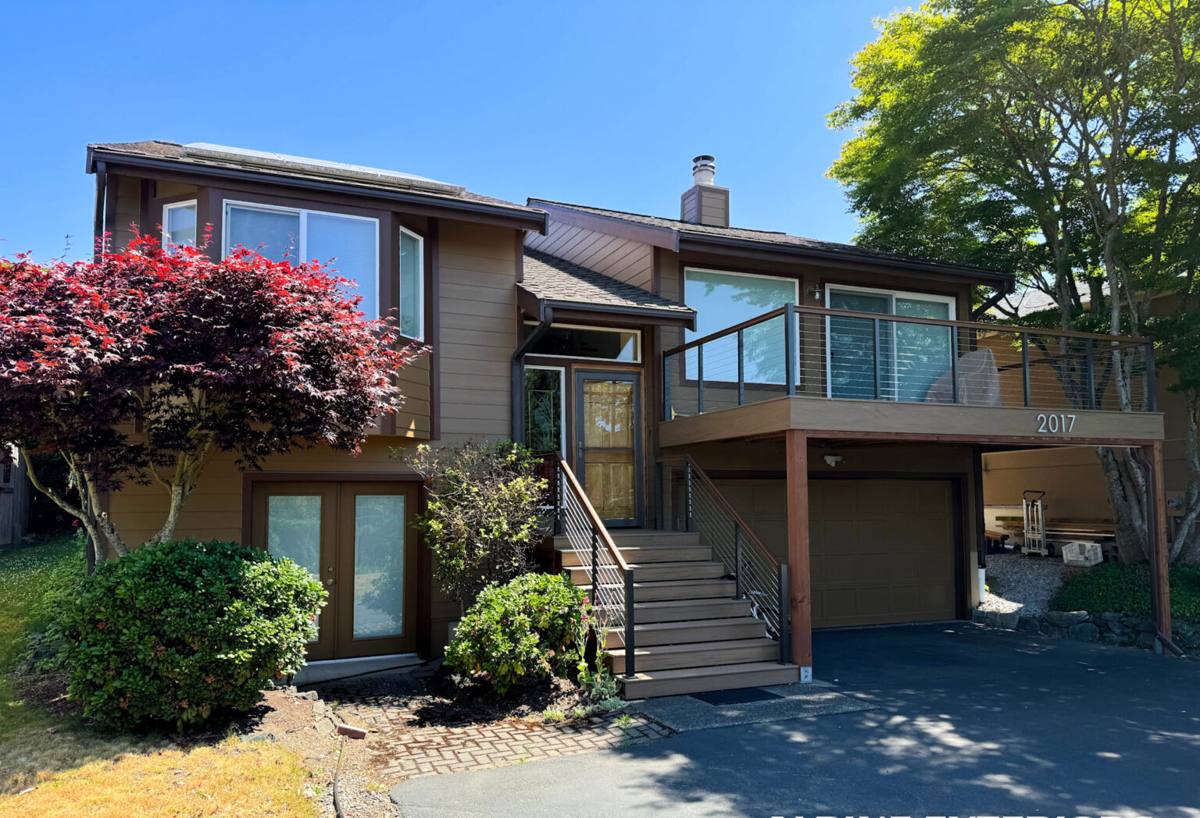
How Salt Air, Rain, and Moss Season Actually Damage Windows
It helps to understand the specific failure modes at work, because they're different from what you'd see in a drier climate.
Salt Air and Metal Fatigue
Salt-laden coastal air accelerates corrosion on window hardware — hinges, locks, balance mechanisms, and especially older aluminum frames. Once corrosion starts on a frame or fastener, it doesn't stop; it just changes how fast it spreads. Homes closer to open water see this fastest, but the effect reaches well inland on breezy days.
Driving Rain and Wind-Driven Water
Bellingham's rain rarely falls straight down. Wind pushes it sideways and up under sills, around trim, and into any gap in the flashing. A window that would perform fine in a calm climate can still leak here if the sill pan, head flashing, or sealant joints weren't detailed for wind-driven water specifically.
Moss, Algae, and Trapped Moisture
Our long, mild, wet season is ideal moss and algae growth conditions — not just on roofs, but on window sills, tracks, and any horizontal surface that stays damp. Trapped organic growth holds moisture against wood and composite materials far longer than open air would, which is a major driver of sill rot and frame swelling on older Silver Beach homes.
Signs a Silver Beach Home's Windows Need Attention
- Fogging or condensation between panes (a sign the seal in a double- or triple-pane unit has failed)
- Soft or spongy wood at the sill, especially on south- and west-facing walls that take the brunt of storms
- Visible moss or dark staining collecting in the frame or track
- Drafts you can feel by hand along the frame edge on a windy day
- Windows that are difficult to open, close, or lock — often a sign the frame has swollen or shifted
- Paint or finish peeling specifically around the window opening, not the rest of the wall
- Visible daylight or gaps around the exterior trim
Any one of these on its own might just mean it's time for maintenance. Two or three together usually mean water has already gotten into the wall assembly and the window itself is no longer the only problem.
What a Correct Installation Actually Involves
A window installation is only as good as what's underneath the trim, and this is where most corner-cutting happens — because it's invisible once the job is done.
Flashing and Water Management
Every opening needs a sloped sill pan so any water that gets past the primary seal drains back out instead of pooling. Head flashing needs to shed water over the window, not just sit flat against it. Side flashing needs to integrate correctly with the home's water-resistive barrier — house wrap or building paper — in the right shingle-lap order, so water moving down the wall is directed around the opening, not into it.
Sealant Is a Backup, Not the Whole Plan
Caulk and sealant matter, but they're a secondary line of defense. A window that relies on a bead of sealant as its primary water barrier will eventually fail, because sealant degrades with UV and weather exposure long before the window itself does. Correct flashing does the real work; sealant fills the gaps.
Frame Material Fit for the Site
Not every frame material performs the same way in a marine climate with heavy tree cover and moss exposure. We factor in the home's sun exposure, proximity to mature trees, and how sheltered or exposed the wall is before recommending a material.
Comparing Window Frame Materials for This Climate
| Material | How It Handles Local Conditions | Maintenance | General Cost Position |
|---|---|---|---|
| Vinyl | Resists moisture and salt corrosion well; won't rot | Low — occasional cleaning | Most economical |
| Fiberglass | Very stable in temperature swings and wet conditions; strong long-term durability | Low | Mid to upper range |
| Aluminum | Prone to corrosion in salt air unless properly coated; conducts cold | Moderate — watch hardware and finish | Mid range |
| Wood-clad | Attractive, but exterior wood exposure is a real liability in constant moss and rain | Highest — regular sealing/paint upkeep | Higher |
None of these is universally "right" — the correct choice depends on the specific wall, sun exposure, and how much upkeep a homeowner actually wants to commit to. We'll walk through the honest trade-offs for your home rather than push whatever's easiest to sell.
Our Installation Process
1. On-Site Assessment
We look at each opening individually — not just the window, but the sheathing, existing flashing, and any signs of past water intrusion. Silver Beach homes vary enough in age and construction that a one-size approach doesn't work.
2. Removal and Opening Inspection
Once the old window is out, we inspect the rough opening for rot, soft sheathing, or damaged framing before anything new goes in. Covering up a compromised opening is how small problems become expensive ones.
3. Sill Pan and Flashing Installation
We build a proper sloped sill pan and integrate flashing with the existing water-resistive barrier in the correct order, so the whole assembly sheds water the way it's designed to.
4. Window Set, Shim, and Seal
The window is set level and square, shimmed correctly so it operates smoothly for years, then sealed at the appropriate points — not over-sealed in a way that traps moisture inside the frame.
5. Interior and Exterior Finish
Trim, insulation at the gap between frame and rough opening, and exterior cladding detail are finished to match the home and keep the assembly weathertight.
6. Final Walkthrough
We test operation, check the seal, and walk the homeowner through anything they should watch for or maintain going forward.
Why Local Experience in Silver Beach Matters
A crew that works Whatcom County regularly knows things a generic installer doesn't: which wall orientations in this neighborhood take the worst of the wind-driven rain, how quickly moss reestablishes on a north-facing sill, and what the older housing stock in this area tends to hide behind its trim. That experience shows up in fewer surprises during the job and fewer callbacks after it. It also means we're not guessing at how a product will hold up here — we've already seen how different materials and installation details perform through a full Bellingham winter.
Bellingham Roofing Company has built its reputation on the exterior envelope as a whole — roofing, siding, and the water management details that tie them together — which is exactly the mindset window installation requires. A window is one piece of a connected system, and it needs to be installed by someone thinking about the whole wall, not just the opening.
Questions Worth Asking Before You Hire
- Will you inspect the rough opening for rot or damage before installing the new window?
- What's your flashing and sill pan detail, specifically?
- How do you handle the transition between the window flange and my home's existing house wrap or building paper?
- What warranty covers the installation labor, separate from the manufacturer's product warranty?
- Can you explain why you're recommending a particular frame material for my specific walls?
- Do you carry current liability insurance and any required licensing for exterior work in Washington?
A contractor who answers these clearly and specifically — without dodging into sales language — is usually one worth trusting with the job.
Keeping New Windows Performing Long-Term
Even a correctly installed window benefits from basic upkeep in this climate. Clear moss and debris from sills and tracks a couple of times a year, especially before the wet season sets in. Check that weep holes (the small drainage openings on the exterior sill) stay clear so water can escape. Keep an eye on caulk lines around the frame and have any cracking or separation addressed before it becomes a path for water. None of this is heavy maintenance — it's the kind of five-minute check that keeps a well-installed window performing for decades instead of one that starts failing quietly a few years in.
If you're noticing drafts, fogged glass, or moisture damage around your windows — or you're planning ahead for a remodel — we're happy to take a look and give you a straightforward, no-pressure estimate. Use the form below to get started.