 Bellingham Roofing
 Windows Built for Sunnyland's Climate, Not Just Any Climate
Sunnyland sits close enough to Bellingham Bay that its homes take on a different kind of weather load than houses further inland in Whatcom County. Salt-laden air off the bay, wind-driven rain that comes in sideways more often than straight down, and a moss season that seems to stretch longer every year all work on window frames, seals, and glazing in ways that generic window replacement advice doesn't account for. A window that performs fine in a dry, protected part of the county can fail early here if it wasn't chosen and installed with this specific exposure in mind.
When we talk about window replacement in Sunnyland, we're talking about a job that has to account for moisture intrusion at the flashing and sill, frame materials that won't corrode or pit from salt exposure, and seals that stay tight through repeated wet-dry cycling all winter and spring. Get any one of those wrong and you're not looking at a cosmetic problem — you're looking at rot, mold, or a failed seal inside five to ten years instead of twenty or more.
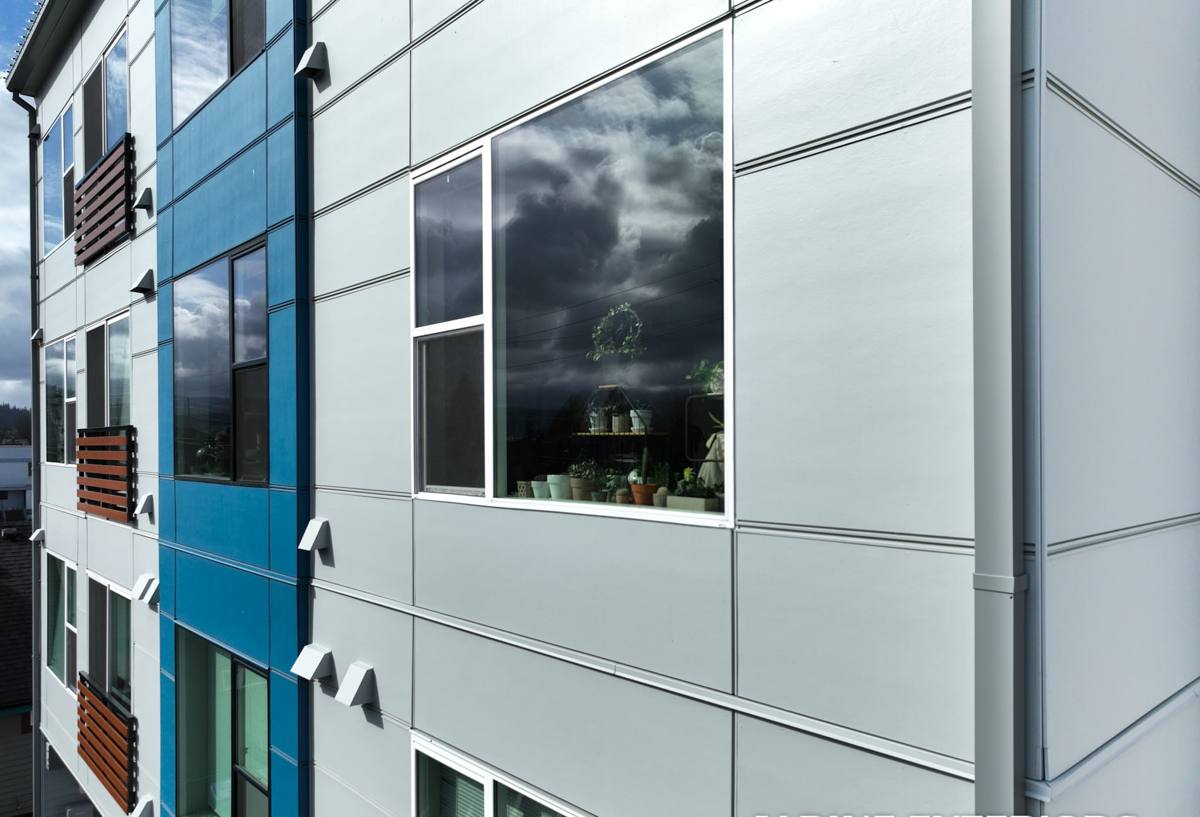
What Bellingham's Salt Air and Rain Actually Do to Windows
Salt Air and Metal Components
Even a few miles from open saltwater, airborne salt settles on hardware, cladding, and any exposed metal fasteners. Over time it accelerates corrosion on lower-grade aluminum components and steel fasteners that aren't rated for coastal exposure. This shows up first as pitting or white corrosion on hardware, then as sticking locks and hinges, and eventually as staining that runs down the frame and siding below the window.
Driving Rain and Water Intrusion
Bellingham's rain rarely falls straight down for long. Wind off the bay pushes it at an angle, which means water gets tested against every seam, joint, and flashing detail a window has — especially on west- and south-facing walls. A window that's watertight in a light, vertical rain can still leak under sustained wind-driven rain if the flashing and sill pan weren't detailed correctly during installation. Most of the "my new windows are leaking" calls we get trace back to installation flashing, not the window unit itself.
Moss, Algae, and Trapped Moisture
Long wet seasons keep humidity high around window openings, especially where trees or fencing shade the wall. Moss and algae growth on nearby siding and trim can trap moisture against the window frame, and if there's already a small gap in the sealant or flashing, that trapped moisture finds its way in. It's a slow problem — most homeowners don't notice until there's visible staining or the frame starts to feel soft.
Signs a Sunnyland Home Needs Window Replacement
- Visible condensation between the panes of a double-pane window (a broken seal, not a cleaning issue)
- Soft, discolored, or spongy wood at the sill or lower frame corners
- Windows that are noticeably harder to open, close, or lock than they used to be
- Persistent drafts you can feel with your hand near the frame on a windy day
- Visible gaps, cracked caulking, or daylight around the frame from outside
- Rising heating bills without any other clear explanation
- Paint or finish that's bubbling or peeling specifically around the window opening
Any one of these on its own isn't necessarily an emergency, but on a Sunnyland home facing the bay-side exposure, two or more together usually means the window's protective seal or flashing has already failed and moisture is getting behind the frame.
What a Correct Window Replacement Job Actually Involves
Swapping in a new window unit is the easy part. The part that determines whether the job lasts is everything around it.
Removal and Inspection
We remove the old window carefully and inspect the rough opening — sill, jack studs, and header — for hidden rot or water damage before anything new goes in. In a wet-exposure neighborhood like Sunnyland, this step catches problems that don't show up until the old window is out. If there's damage, it gets addressed before the new window goes in, not covered over.
Flashing and Sill Pan Detailing
This is the step that actually keeps driving rain out. A proper sill pan sheds water forward and out rather than letting it sit against the framing, and window flashing tape needs to integrate correctly with the home's existing weather-resistive barrier — lapped in the right order so water always drains outward, never inward. This is the single most common place corners get cut on cheap installations, and it's the reason two visually identical installs can have completely different lifespans.
Air Sealing and Insulation
The gap between the new window frame and the rough opening gets sealed and insulated properly — not just stuffed with excess fiberglass, which can actually hold moisture. Low-expansion foam or backer rod and sealant, sized correctly for the gap, keeps drafts out without trapping water against the frame.
Exterior Trim and Sealant
Exterior caulking and trim work get finished with sealants rated for our wet climate, and we pay attention to how the trim detail sheds water rather than collecting it — a small design choice that matters a lot in a neighborhood that sees this much rain.
Choosing the Right Frame Material for This Exposure
Material choice matters more here than in drier parts of the county. We steer homeowners toward frame materials and hardware finishes that hold up against salt air and constant moisture cycling, rather than options that look good on day one but need more upkeep than most people want to take on. That's a maintenance and longevity judgment call, not a knock on any particular product — every material has trade-offs, and the right one depends on your home's specific exposure and your appetite for upkeep.
| Frame Material | Coastal/Rain Performance | Maintenance | Typical Trade-off |
|---|---|---|---|
| Vinyl | Good moisture and corrosion resistance | Low | Limited color/finish options, can flex in large sizes |
| Fiberglass | Very good — stable, low expansion/contraction | Low to moderate | Higher upfront cost |
| Aluminum-clad wood | Good exterior protection if detailed well | Moderate | Interior wood still needs periodic care; cladding seams need attention |
| Bare wood | Requires diligent upkeep in this climate | High | Best look/feel, but demands regular painting and sealing here |
None of these are wrong choices in general — they're just better or worse fits for a bay-adjacent, high-rainfall neighborhood depending on how much maintenance you're willing to do.
Energy Performance in a Marine Climate
Whatcom County's mild but damp climate means window replacement pays off differently here than in a hot, dry region. You're not fighting extreme heat — you're fighting heat loss through drafts and condensation risk from constant humidity. Look for a solid U-factor rating for insulation and confirm the window carries a proper condensation resistance rating, since that number tells you how well the window resists interior condensation during our long stretches of cool, wet weather. A qualified installer should be able to walk you through these numbers in plain terms, not just hand you a brochure.
Our Process for Sunnyland Window Replacement
- On-site assessment — we look at each window's exposure, current condition, and any signs of moisture damage before recommending anything
- Honest recommendation — we tell you which windows actually need replacement now versus which can wait, and why
- Material and product selection — matched to your home's exposure, budget, and how much maintenance you want to take on
- Careful removal and opening inspection — checking framing condition before the new unit goes in
- Correct flashing, sealing, and insulation — the details that determine whether the job lasts
- Final walkthrough — checking operation, seals, and finish work with you before we call it done
Why Local Experience in Sunnyland Matters
A crew that's worked window replacement jobs specifically in Sunnyland and similar bay-adjacent parts of Bellingham has already seen how this neighborhood's exposure plays out over years, not just on install day. That means knowing which walls take the worst of the wind-driven rain, what rough-opening condition to expect on homes of different ages, and how to detail flashing so it actually holds up through a full Whatcom County winter. A contractor unfamiliar with this specific microclimate can still do a technically fine install and still get the exposure assumptions wrong — and in this neighborhood, that's the difference between windows that last two decades and windows that need attention again in five years.
What Window Replacement Typically Costs
Costs vary based on window size, frame material, number of openings, and whether there's hidden framing damage to address. As a broad, honest range, most single-window replacements on a home like the ones in Sunnyland run from the low thousands per window for standard vinyl units up to significantly more for larger openings or higher-end fiberglass and clad-wood options. The only way to get a number that means anything for your home is a walkthrough — we don't quote sight unseen, because exposure and existing condition change the number too much to guess.
What Affects Your Final Price
- Frame material and glass package chosen
- Window size and whether it's a standard or custom shape
- Number of windows being replaced at once (bundling saves on labor)
- Condition of the existing rough opening — hidden rot adds repair time
- Full-frame replacement versus insert replacement, where the existing frame can be reused
- Trim and exterior finish work needed to match the rest of the home
If you're noticing drafts, fogged glass, or sticking windows in your Sunnyland home, it's worth having someone take a real look before another wet season adds to the damage. We offer free, no-pressure estimates — use the form below to get one scheduled.